TIPS Certification: What It Is, What It Costs, How Long It Lasts, and Where It Counts

TIPS certification is the credential most managers mean when they tell a new hire to go get certified to serve alcohol. The name covers several different courses, though. Whether your certificate satisfies the law depends on which one you took and which state you work in.
TIPS stands for Training for Intervention ProcedureS. The program was developed in 1979 by the Health Education Foundation under Dr. Morris Chafetz and is now part of 360training. TIPS reports that the two have certified more than 11.5 million people since then.
This guide covers what TIPS teaches, what it costs, how long it lasts, and the difference between the On-Premise and Off-Premise courses. It also covers how five states treat it: California, Montana, New York, Pennsylvania and Wisconsin. Rules were checked against state sources in October 2026.
Find the course that counts in your state:
New York: ATAP On-Premise or ATAP Off-Premise, $19.99
California: California RBS Certification, $15
Montana: TIPS Montana, $40
Pennsylvania: Pennsylvania RAMP Alcohol Training, $29
Wisconsin: TIPS Wisconsin On-Premise, $38
Anywhere else: TIPS On-Premise for bars and restaurants or TIPS Off-Premise for stores, $38. Texas, Illinois, Oregon and Washington have their own credential, covered below.
The short answer
What it is: a responsible alcohol service course with an exam and a certificate at the end. The standard online courses run about three hours.
What it costs: $38 per seat on Learn Brands for the national On-Premise or Off-Premise course. State versions run from $15 to $40.
How long it lasts: generally three years. States that regulate server training set their own period.
Whether it counts: your state decides. California, Montana, Pennsylvania and Wisconsin approve a state-specific TIPS course as their required training. New York treats training as voluntary. Texas, Illinois, Oregon and Washington each have their own named credential.
What TIPS certification is
TIPS teaches the people who sell and serve alcohol how to prevent the sales that get a business in trouble: sales to minors, sales to intoxicated customers, and the drunk driving that can follow.
The course covers five things:
Your legal responsibilities and the types of illegal alcohol sales
How to check IDs and spot altered or borrowed ones
How alcohol affects the body, what BAC means, and what changes it
How to read behavioral cues and judge how intoxicated someone is
How to step in: slowing service, refusing a sale, and documenting what happened
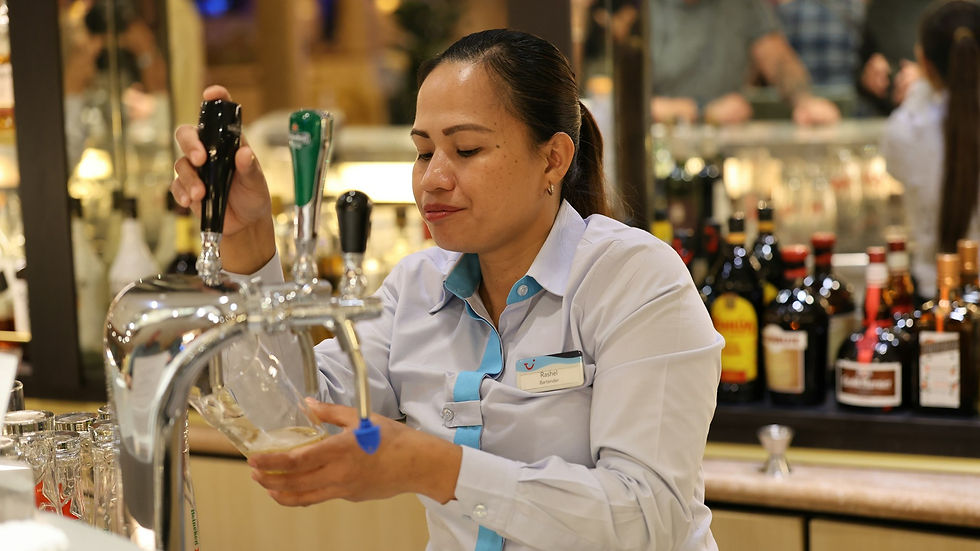
Employers ask for it for three reasons. In some states it is the law. It can lower insurance costs: TIPS says certified businesses may earn discounts on liquor liability insurance from more than 70 insurers. And it helps if something goes wrong. TIPS describes its training as support for a "reasonable efforts" defense in third-party liability lawsuits, though how much weight that carries depends on your state's law.
Refusing a sale is the hardest moment in the job. Our guide to de-escalation for retail and bar staff covers the conversation itself.
TIPS On-Premise vs Off-Premise: which one fits your job
TIPS splits its training by where the alcohol is consumed. Pick the course that matches where you work.
On-Premise | Off-Premise | |
Where you work | Bars, restaurants, hotels, tasting rooms and in-store tastings | Liquor, grocery, convenience and package stores |
What it focuses on | Service across a visit: watching behavior change over several drinks and stepping in | The short sale: one look at an ID and one decision at the register |
Length | 3 hours | 3 hours |
Price on Learn Brands |

TIPS also runs Concessions, Gaming, University and Off-Premise & Delivery programs for stadiums, casinos, campuses and delivery drivers.
One caution on the national courses. They teach the full TIPS program, but they do not replace a state-mandated certification. If your state requires its own approved course, take that state's version. The state section below shows which is which.
How much TIPS certification costs
The national TIPS courses are $38 per seat on Learn Brands, for On-Premise or Off-Premise. The price includes the course, two attempts at the final exam, and the certificate.
State versions are priced separately:
Course | Price per seat |
California RBS Certification (TIPS program) | $15 |
New York ATAP, On-Premise or Off-Premise (Learn2Serve) | $19.99 |
Pennsylvania RAMP Alcohol Training (TIPS program) | $29 |
TIPS Wisconsin On-Premise | $38 |
TIPS Montana | $40 |
California adds a state fee on top. You pay the ABC a registration fee when you create your RBS Portal account.
Ask who pays before you buy. Many employers cover server training or buy seats for the whole staff.
How long TIPS certification lasts
TIPS certification is generally good for three years, according to 360training, the company that owns TIPS. It also notes that states require retraining every two, three or four years depending on the jurisdiction.
Your state's rule wins over the general one. A Pennsylvania server retrains every two years, while California, Montana and New York all use three.
To renew, you retake the course and the exam. Check the date printed on your certificate against your state's rule in the table below, and renew before it passes.
Where TIPS counts, state by state
There is no national alcohol server license. Each state decides whether training is required, which courses count, and how long a certificate lasts.
This table covers the states where Learn Brands carries a TIPS course, plus New York. For any other state, check your alcohol regulator's approved provider list before you buy.
State | What the state calls it | Is it required? | How long it lasts | Course on Learn Brands |
California | RBS certification | Yes, for on-premise servers and managers, within 60 days of the first day of work | 3 years | California RBS Certification, TIPS program, $15 |
Montana | Responsible alcohol sales and service training | Yes, for anyone serving or selling, within 60 days of hire | 3 years | TIPS Montana, $40 |
New York | ATAP | No. Voluntary, and the Liquor Authority may reduce a penalty when staff are certified | 3 years | ATAP On-Premise or Off-Premise, Learn2Serve, $19.99 |
Pennsylvania | RAMP server/seller training | Yes, for alcohol service staff, within six months of hire | 2 years | Pennsylvania RAMP Alcohol Training, TIPS program, $29 |
Wisconsin | Responsible beverage server training | Yes, to get an operator's license, unless you held one in the past two years | Counts toward a license application for two years |

TIPS certification in New York and NYC
New York does not require individual servers to hold a certificate. The State Liquor Authority runs the Alcohol Training Awareness Program (ATAP), certifies the schools that teach it, and strongly recommends it. Liquor licensing in New York City runs through the same state authority, so the rules are the same in all five boroughs.
TIPS is an ATAP-certified provider, and so is Learn2Serve. An ATAP certificate expires three years from the date of the session.
The payoff is for the business. If a violation happens and the licensee can show the employee completed a certified program, the Liquor Authority may reduce the penalty. TIPS notes that the business needs a clean record on similar violations for the previous five years to be considered.
Learn Brands carries the Learn2Serve ATAP courses at $19.99, which earn the same ATAP standing for about half the price of TIPS. Our guide to New York training requirements covers the rest, including the harassment training that is mandatory.
TIPS and California RBS
California's requirement is Responsible Beverage Service (RBS) certification, and TIPS is one of the training providers approved by the Department of Alcoholic Beverage Control. If you are searching for California TIPS certification, RBS is the credential you need.
The ABC sets three steps: register in the RBS Portal, complete training from an approved provider, and pass the ABC's exam within 30 days of finishing the training. Certification lasts three years. The rule covers on-premise servers and their managers, who must be certified within 60 days of their first day of employment.
Our California RBS certification guide walks through each step.
TIPS certification in Montana
Montana requires training for anyone serving or selling alcohol within 60 days of being hired, with renewal training every three years.
The TIPS Montana course covers on-premise, off-premise and delivery in one two-hour program. The brand matters here: 360training states that its Learn2Serve course is not valid in Montana, while TIPS is.
TIPS and Pennsylvania RAMP
Pennsylvania's program is RAMP, run by the Liquor Control Board. Alcohol service staff hired on or after August 8, 2016 must complete RAMP server/seller training within six months of being hired. You need a score of 80 percent or better to get credit.
The Pennsylvania RAMP course on Learn Brands is the TIPS on-premise program with PLCB-approved server/seller training built in. Training lasts two years. Our Pennsylvania RAMP certification guide covers who is exempt and when the business itself must be certified.
TIPS certification in Wisconsin
Wisconsin ties training to the operator's license, often called a bartender's license, which your municipality issues. As the City of Madison clerk's office explains it, a new applicant must have either held an operator's license or completed an approved responsible beverage server course within the past two years.
The Department of Revenue's approved list includes TIPS for one online course only: eTIPS On Premise. After you pass, take your certificate to your municipal clerk to apply for the license.
States with their own credential
Texas, Illinois, Oregon and Washington each have a named state credential with its own approved courses. If you work in one of them, start with the state guide:
Courses for Arizona Title 4, Michigan, Indiana and Maine are in the on-demand course catalog.
How to get TIPS certified
Check what your state and your employer require. The table above covers five states. Your state alcohol regulator's website covers the rest.
Pick the course that matches your job. On-Premise, Off-Premise, or your state's version.
Take the course online. It is self-paced, and you can log out and pick up where you left off.
Pass the final exam. Each attempt has to be finished in one sitting, and two attempts are included.
Download your certificate. It is available as soon as you pass. Give a copy to your manager.
Finish any state step. In California that means the ABC's exam in the RBS Portal. In Wisconsin it means taking your certificate to the municipal clerk.

For managers: certifying a whole team
When an inspector, an insurer or a lawyer asks for proof of training, you need every certificate in one place. Buying seats one at a time and collecting PDFs by email makes that hard.
With a free Learn Brands company account you buy the seats you need, assign each course to the right people across your locations, and see who has finished.
Certification covers the legal side of service. For product knowledge, our list of free alcohol training courses for retail teams shows what is available.
Running several locations? Book a demo to see how course assignment and completion tracking work.
TIPS certification FAQ
What is TIPS certification?
TIPS (Training for Intervention ProcedureS) is a responsible alcohol service training program. You complete a course, pass an exam and receive a certificate showing you were trained to check IDs, recognize intoxication and refuse a sale.
How long does TIPS certification last?
Generally three years. States that regulate server training set their own period: three years in California, Montana and New York, and two years in Pennsylvania.
Does TIPS certification expire?
Yes. Renew by retaking the course and exam before the date on your certificate.
How much does TIPS certification cost?
$38 per seat for the national On-Premise or Off-Premise course on Learn Brands. State versions are $15 for California RBS, $29 for Pennsylvania RAMP, $38 for Wisconsin and $40 for Montana.
Is TIPS certification required?
It depends on the state. California, Montana and Pennsylvania require approved training for the roles described above, and Wisconsin requires it for an operator's license. New York does not. Employers and insurers often ask for it even where the state does not.
Is TIPS certification required in New York or NYC?
No. ATAP certification is voluntary in New York, and the same state rules apply in New York City. The Liquor Authority may reduce a penalty for a business whose staff completed a certified ATAP course.
Is there a free TIPS certification in NYC?
TIPS is a paid course. The lower-cost way to earn ATAP standing in New York is the Learn2Serve ATAP course at $19.99. Ask your employer first, since many pay for it.
What is the difference between TIPS On-Premise and Off-Premise?
On-Premise is for places where alcohol is consumed on site, such as bars, restaurants and hotels. Off-Premise is for stores that sell alcohol to take away, such as liquor, grocery and convenience stores.
Can I get TIPS certified online?
Yes. The course and exam are online and self-paced, and you can download your certificate when you pass. In Wisconsin, eTIPS On Premise is the only TIPS course on the state's approved online list.
Is TIPS the same as California RBS certification?
TIPS is one of the training providers approved by the California ABC. Completing the TIPS California RBS course is the second of three steps. You also register in the RBS Portal and pass the ABC's exam.
Does TIPS certification transfer to another state?
Do not assume it does. States with a training requirement approve specific courses, so a move usually means taking the new state's version.
Get certified
Pick the course that matches your state and your job. The courses are self-paced, and your certificate is ready when you pass.
About the author
Mathew Benoit is the COO and Creative Director at Learn Brands. He spent more than a decade in the three-tier beverage alcohol industry across retail, distribution, and national brand representation before building the Learn Brands training platform.
Learn Brands is a Denver-based training platform that connects beverage alcohol and cannabis brands, retailers, and distributors through product knowledge, compliance certification, and rewards. This article summarizes TIPS program details as published by TIPS and 360training, and state requirements as published by each state's alcohol regulator; confirm current rules with your regulator before relying on them.


