How to Sell Gin: Product Knowledge Guide for Retail and Distribution Teams

Updated: 7 days ago
Gin is one of the harder spirits to sell well.
The category exploded over the past decade, the styles vary wildly from one bottle to the next, and most shoppers walk in with a single fixed idea of what gin tastes like.
A rep who knows how to sell gin can move a customer past that one idea and into a bottle they will come back for. That skill is product knowledge, and it is teachable.

Why gin is harder to sell than most spirits
Whiskey and tequila have clear reference points for the average buyer. Gin does not. The word covers everything from a sharp, juniper-forward London Dry to a soft, floral contemporary gin that barely tastes like the category at all. Two bottles sitting side by side can deliver completely different experiences, and a customer who tried one and disliked it often writes off the whole shelf.
That gap is the opportunity. When a retail team can ask the right question and match a shopper to the right style, gin stops being a coin flip and becomes a repeat purchase. The same logic applies upstream: distribution teams that understand a portfolio can place it in the right accounts and coach the buyer on how to sell it through. Gin and vodka sit side by side in a lot of customer decisions, the martini above all, so it helps to be just as fluent in how to sell vodka.

The gin styles every rep should know
Most gin questions come down to style. Learn these six and you can place almost any bottle on the shelf for a customer.
London Dry
The classic. Juniper-led, crisp, and dry, with citrus and pepper notes and no added sugar or flavoring after distillation. This is the benchmark for a gin and tonic or a martini, and it is the style most customers picture when they say they "don't like gin." A good entry point for traditionalists.
Plymouth
Softer and slightly earthier than London Dry, with a fuller body and less juniper bite. A solid recommendation for someone who finds London Dry too sharp but still wants a recognizable gin character.
Old Tom
A lightly sweetened, rounder style that bridges the gap between juniper-heavy gins and easier-drinking spirits. Useful for classic cocktails like the Tom Collins and for shoppers who lean toward smoother spirits.
Contemporary (New Western)
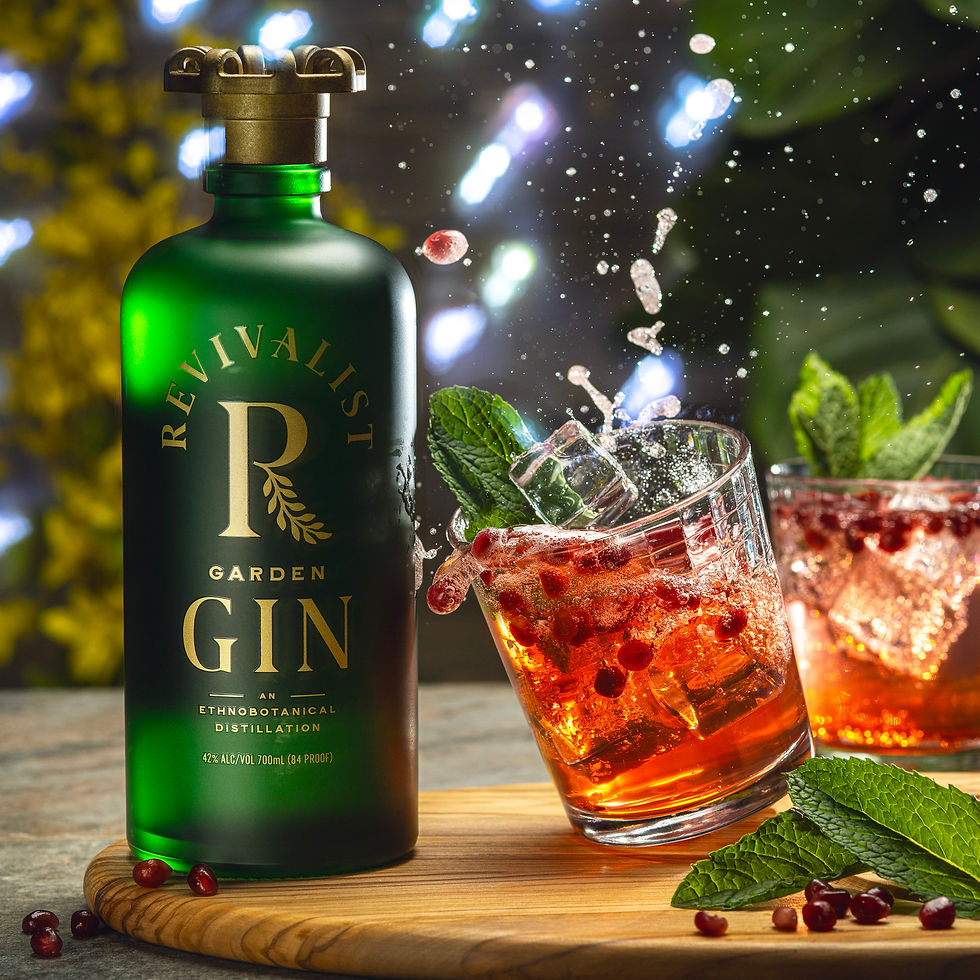
This is where the category opened up. Contemporary gins pull juniper back and lead with other botanicals: florals, citrus, herbs, spice. They appeal to drinkers who think they dislike gin because they only know the juniper-forward version. Revivalist Garden Gin lives here, which we cover below.
Navy Strength
Higher proof, traditionally bottled at 57 percent ABV or above. Bolder, more intense, and built to hold up in a strong cocktail. A confident pick for enthusiasts and bartenders.
Barrel-Aged
Gin rested in wood, picking up color and notes of vanilla, oak, and spice. A crossover bottle for whiskey drinkers who want something to sip.
A rep who can name the style and one matching serve has already done most of the work of the sale.
What actually closes a gin sale:
Reading the label
Style is the headline. These four details are how you back it up and turn a browse into a buy.
Base spirit. Most gin starts from a neutral grain or wheat spirit, and the base shapes the texture. A wheat base tends to read softer and rounder on the palate, which matters when you are positioning a premium bottle.
Botanicals. Juniper is required by definition, but the supporting botanicals are the story. Citrus peel, coriander, angelica, florals, and more unusual ingredients all push the flavor in a direction. Knowing two or three signature botanicals gives a rep something concrete to say instead of "it's a nice gin."
ABV. Proof signals intensity and intended use. A standard 40 to 44 percent gin is built for everyday cocktails. A Navy Strength bottle is built to cut through mixers and sing in a strong drink.
Serve. Always close with a suggestion. A G and T, a martini, a Negroni, or a simple garnish recommendation gives the customer a reason to take the bottle home tonight, not someday.
These are the same fundamentals our free Core Education Suite builds across spirits categories, and they translate directly to how a team talks about any bottle on the floor.
If your accounts include bars, Mixology 101 shows how gin earns its place in the Martini, Negroni, Tom Collins, Gin and Tonic, and French 75. It is free.

A worked example:
How to talk about Revivalist Garden Gin
Revivalist Garden Gin is a strong example of a contemporary gin that needs product knowledge to sell. It does not lead with juniper, so a rep who pitches it as a typical gin will undersell it. Here is how the same details above turn into a confident recommendation.
The story.
Revivalist was created by Brendan Bartley, the Head Bartender and Beverage Director at Bathtub Gin in New York and Los Angeles, and it is distilled by Botanery Barn Distilling in a renovated 1860s barn in Elverson, Pennsylvania, with some botanicals grown on site. That origin gives a customer a reason to care before they ever taste it.
The concept.
The brand is built around ethnobotany, the practice of choosing plants for their medicinal, spiritual, and culinary roots. That is the hook that separates it from the shelf.
The build.
It starts from a French wheat base spirit, which gives it that softer, rounder texture, and the botanicals are infused through a proprietary cold-brew process with no additives, sugar, or artificial flavoring.
The botanicals.
Ashwagandha root, lemon verbena, rose hips and rose petals, plum, and hemp seed. Naming even two of these turns a generic pitch into a memorable one.
The serve.
Because it is balanced and dialed back from juniper bombs, it shines in a garden-style G and T with a botanical garnish or a lighter martini. Point the customer there and you have matched the bottle to the experience.
That is the whole method: style, base, botanicals, serve, story. Revivalist makes it easy to practice because every detail rewards a rep who took the time to learn it.

How to train a team on gin product knowledge
Knowing this material is one thing. Getting an entire retail or distribution team to know it, consistently, across shifts and locations, is the real challenge. That is where structured training beats a one-time tasting or a printed sell sheet that ends up in a drawer or in the trash can.
Effective gin product training is short, repeatable, and trackable. It gives every team member the same foundation, lets a manager see who has completed it, and stays available when a new hire starts or a new bottle lands. For brands and distributors, that means a portfolio gets sold the same confident way in every account, not just the ones the rep visited last.
This is the gap Learn Brands was built to close. Our on-demand premium courses put brand-specific product knowledge in front of retail and wholesale teams in a format they will actually finish, with completion tracked on the platform. The same approach powers our work on distributor sales training and ties into broader activation marketing efforts that drive sell-through.
Train your team on Revivalist Gin
The full Revivalist Gin course is live on Learn Brands now. It covers the brand story, the production process, the botanicals, and clear positioning for each expression, so your team can recommend it with confidence and match it to the right customer every time.
Start the Revivalist Gin course and train at your own pace, with completion tracked across your team.
Want your own portfolio taught this way? Book a demo or contact our team to see how Learn Brands delivers product training across retail and distribution.

Gin anchors the Martini, Negroni, Gin and Tonic, Tom Collins and French 75. Our guide to the 25 classic cocktails every bartender should know has the spec for each.
Frequently asked questions
What is the best gin style for someone who is new to Gin?
Steer them toward a contemporary or New Western gin. These pull back the juniper and lead with citrus, florals, or herbs, so they read very differently from the sharp London Dry most people picture. Revivalist Garden Gin is a good example of this softer, more approachable style.
How is contemporary gin different from London Dry?
London Dry is juniper-forward, crisp, and dry by definition. Contemporary gin keeps the required juniper but builds the flavor around other botanicals, producing a softer and more varied profile. The difference is large enough that a customer can love one and dislike the other.
What makes Revivalist Garden Gin stand out on the shelf?
It is built around ethnobotany, using botanicals like ashwagandha, lemon verbena, rose, plum, and hemp seed on a French wheat base, with no additives or sugar. The result is a balanced, softer gin that suits drinkers looking for an expression which is beyond other standard juniper heavy distillates.
How long does gin product training take for a retail team?
With a focused, on-demand format, a team can complete a single brand course in well under an hour and refer back to it anytime. The advantage over a one-time tasting is that the knowledge stays available and completion is tracked. See the free Core Education Suite for the foundational spirits material.


