Baijiu Basics: Why China's Best-Kept Secret Is the Biggest Category Western Bars Have Never Stocked

Updated: Sep 26
The world's largest spirit. The smallest section on most American back bars. Here's what bartenders, retailers, and curious drinkers need to know about baijiu in 2026: what baijiu is, how it tastes, and why the next five years will look nothing like the last fifty.

There is a spirit in your life that you probably cannot pronounce, almost certainly have not poured, and statistically should have already tasted. More of it is consumed every year than vodka, whisky, gin, rum, and tequila combined. Its leading producer has, on certain trading days, been worth more than every Western spirits group on Earth put together. It has been served at every Chinese state banquet for the last half century, including the one that ended the Cold War freeze with the United States.
It is baijiu, and almost none of it leaves China.
That has started to change. The US baijiu market sat at USD 657 million in 2024 and is forecast to reach USD 1.2 billion by 2033, growing at a compound annual rate of 6.9 percent. China exported $605.2 million worth of baijiu in just the first eight months of 2025, up 4.7 percent year over year. American bartenders are pouring it into Negronis. Specialty retailers are clearing shelf space for it. And the producers who define the category, names most US drinkers have never heard, are quietly building distribution in North America one market at a time. Grand View ResearchVino-joy
For trade professionals on the floor, behind the bar, or building a beverage program, this is the rare category that combines a massive global track record with a wide-open domestic opportunity. For consumers, it is one of the most genuinely new tasting experiences left in modern spirits. Either way, the time to learn the basics is now, before the wave arrives and the questions start coming faster than the answers.
This post is the long version. The free Baijiu Basics: China's Best-Kept Secret course on Learn Brands is the structured version, six modules with flashcards, knowledge checks, and a completion badge in about 45 minutes.
What Is Baijiu, Exactly?
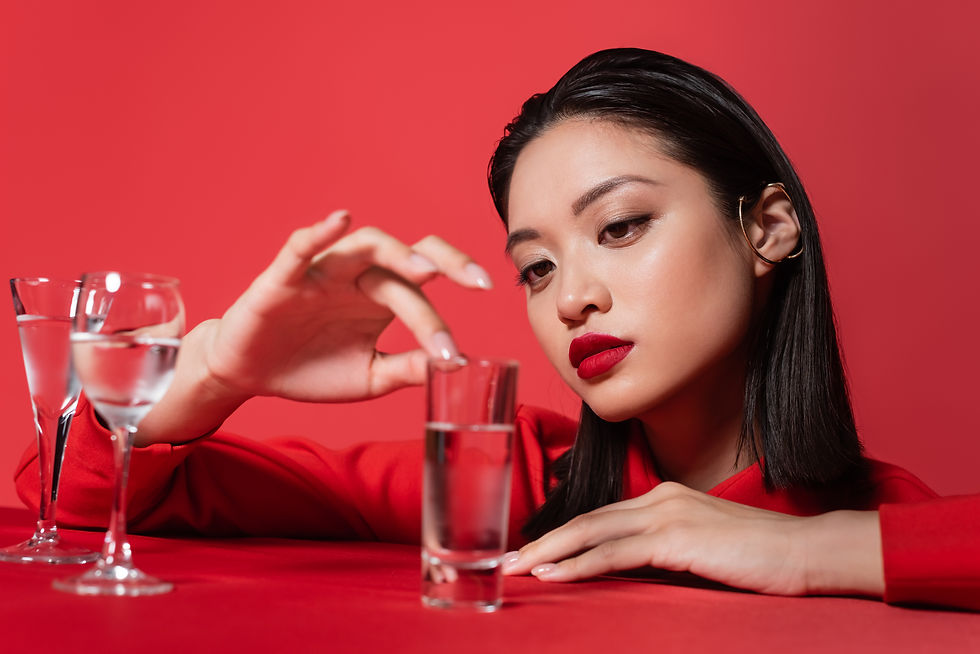
Baijiu, pronounced roughly bye-jyo and written 白酒 in Chinese, literally means white liquor. It is a clear, distilled grain spirit made primarily in mainland China.
The base grain is most often red sorghum, sometimes blended with rice, wheat, glutinous rice, or corn. Bottling strength runs across a wide band, from soft rice aroma styles in the high 30s percent ABV to traditional sauce and strong aroma flagships at 50 to 53 percent and beyond.
So far this sounds like a generic clear spirit. It is not. Baijiu has a production method, a flavor universe, and a cultural footprint that look like nothing else on a back bar.
Start with fermentation. Almost every other major world spirit ferments a liquid wash. Whisky ferments mashed barley as a thin beer. Vodka and rum ferment liquid solutions of grain or molasses. Tequila and mezcal ferment crushed, cooked agave juice.
Baijiu does something completely different. Cooked grain is mixed with a microbial starter called qū and fermented as a moist, crumbly solid mass, packed into earthen pits, brick cellars, or large clay jars. The same solid mash is then loaded into a still and steam is drawn up through it, lifting volatile aromatics off the grain bed and condensing them into raw spirit.
This solid-state fermentation is the single most important thing that separates baijiu from vodka, whisky, rum, gin, or tequila. It produces flavors no liquid-fermented spirit can replicate. Depending on the style, a glass of baijiu can smell like tinned pineapple and ripe banana, soy sauce and dried mushroom, white flowers and aniseed, or cooked rice and jasmine. None of those notes come from added flavorings. They are all the natural work of grain, microbes, and time.

Then there is qū itself. Qū (麯) is a cake or brick of crushed grain inoculated with wild microbes from the air, the room, and the previous batch. It supplies the yeast that produces alcohol, the molds that break starch into sugar, and a long tail of bacteria responsible for the savory, fruity, and funky notes the category is known for. Chinese distillers call qū the soul of baijiu, and the great producers guard their qū rooms the way Champagne houses guard their cellars. The single most prestigious qū style, da qū, is made from wheat, pressed into heavy bricks, and used for the rich sauce and strong aroma styles. Xiao qū is rice-based and lighter. Fu qū is a faster-acting bran starter used in more industrial production.
If you only remember one technical thing about baijiu, remember qū. It is what makes the spirit possible and what makes it taste like itself.
A Category at a Different Scale
The numbers around baijiu are difficult to absorb the first time you hear them. The global market sits well into the hundreds of billions of dollars annually. Baijiu sales in China reached roughly $111 billion in 2024, accounting for over 70 percent of China's total alcohol market value. By volume, baijiu is the world's most consumed spirit category, period. The average adult drinker in China consumes several liters of it a year, almost entirely from a few hundred dominant brands. Miller Beer

Kweichow Moutai, the prestige sauce aroma producer, has at moments been the most valuable beverage company on Earth by market capitalization, ahead of Coca-Cola, Diageo, and every Western spirits group. A single bottle of vintage Feitian Moutai has sold at auction for the price of a luxury car. A standard 500 ml bottle of current-release Feitian retails in China at a price point that puts it in conversation with luxury Cognac and rare single malt.
And almost none of this is visible from a Western liquor store. The export shelf shows a few bottles, mostly Ming River and a handful of low-priced expressions aimed at the Asian American gift market. The rest of the iceberg, the prestige brands, the regional specialists, the multi-billion dollar regional houses, sits below the surface for most American drinkers and most American trade buyers.
That visibility gap is what every projection on the US market is built around. Analysts forecast that baijiu exports could reach 2 to 3 percent of total global production volume by 2034, compared to less than 0.5 percent in 2020, representing a multi-billion dollar international revenue stream. American bartenders and mixologists are increasingly experimenting with baijiu in cocktails and tastings, introducing it to consumers as a unique craft ingredient rather than a niche foreign liquor. DatainteloGrand View Research. In other words, the spirit is going to keep arriving. The trade question is who learns to sell it first.

The 4 Aroma Categories You Actually Need to Know
China classifies baijiu by aroma rather than by region, which is the single most important navigational fact for anyone trying to make sense of the category. Around twelve aroma types are formally recognized in the national standard. Four dominate every menu and every conversation: sauce, strong, light, and rice.
Sauce Aroma (Jiang Xiang) is the most demanding category to produce and the most prestigious to drink. Eight rounds of fermentation, seven rounds of distillation, and several years of resting before a single drop reaches the blender. The flavor profile is bold and savory, with notes of soy sauce, dark miso, dried mushroom, baked apple, and a long umami finish that can run a full minute on the palate. Kweichow Moutai is the icon. If a guest wants to taste the category at its most distinctive, this is the family to pour. If they want a single bottle to anchor their understanding, Feitian Moutai at 53 percent ABV is the reference point.
Strong Aroma (Nong Xiang) is the soundtrack of every Chinese banquet outside Guizhou. It is the most consumed category in China and the country's everyday luxury. The signature notes are tropical fruit, ripe pineapple, overripe banana, and a dense, oily texture. Sichuan houses such as Wuliangye and Luzhou Laojiao define the style. The flavor comes from long fermentations in mud pits older than the United States. Luzhou Laojiao's oldest fermentation pits have been in continuous use since 1573, in the Ming dynasty, which makes them older than any working whisky distillery on Earth. For Western bartenders, this is the workhorse aroma. Ming River, the export-focused expression made by Luzhou Laojiao, is the single most stocked baijiu behind US craft cocktail bars today.
Light Aroma (Qing Xiang) is the string quartet of the category. Crisp, clean, and almost herbaceous, with notes of apple, fennel, white flowers, and a touch of aniseed. Fenjiu from Shanxi province is the flagship, with a documented record stretching back well over a thousand years and an appearance in a famous Tang dynasty quatrain by the poet Du Mu that pointed travelers toward Apricot Blossom Village, the home of Fenjiu. Fermentation in clean stone jars rather than mud pits keeps the spirit lifted and bright. For guests new to the category, this is often the easiest entry point.
Rice Aroma (Mi Xiang) is the southern Chinese style, built around rice instead of sorghum and a smaller, herb-driven xiao qū. Guilin Sanhua from Guangxi is the textbook example. The spirit is soft and gentle, with notes of cooked rice, light banana, jasmine, and a faint dairy creaminess. Bottling strength is usually lower than the other big styles, often in the high 30s to mid 40s. Rice aroma is the gentlest first pour on any baijiu menu.
Beyond those four sit phoenix aroma (Xifeng), mixed aroma (Yanghe, Baiyun), and a long tail of regional specialty styles including sesame, special, mi/honey, lao bai gan, fuyu, and chi. Together they show that the category is much wider than any single flavor stereotype suggests.
If you can taste one bottle from each of the four dominant aroma styles, side by side, the category opens up in a way that no amount of reading ever quite manages. A small flight of Fenjiu Bofen, Ming River, Feitian Moutai, and Guilin Sanhua is the working bartender's starter kit.
Baijiu Is Not Soju, Shochu, or Sake
This question comes up at almost every introductory tasting, so it is worth settling early.
Baijiu is sometimes confused with huangjiu, an older Chinese fermented (not distilled) beverage similar in spirit to sake. Huangjiu is fermented yellow rice wine. Baijiu is a distilled spirit. They are not the same drink and do not belong in the same conversation.
Baijiu is also distinct from Japanese shochu and Korean soju. Shochu and soju are lighter, lower-strength distillates from a different cultural and production lineage. Most commercial soju is bottled at roughly 16 to 25 percent ABV. Shochu typically sits in the mid 20s. Sauce and strong aroma baijiu typically reach 50 to 53 percent ABV and were never built to be drunk in the same way. Saying a guest enjoys soju is not a reliable signal that they will enjoy baijiu. The flavor universes barely overlap.
If a bottle says baijiu, it is distilled, Chinese, and almost certainly built around qū fermentation. If it says something else, it almost certainly is not baijiu.

Why Baijiu Belongs Behind a Western Bar
For trade buyers and beverage directors, the case for baijiu rests on three pillars: flavor, opportunity, and margin.
Flavor first. Baijiu carries flavors no other spirit can match, and a careful quarter ounce can transform a familiar cocktail template into something entirely new. The category has a deep canon and a wide-open Western audience. Bartenders who learn it early become the people their guests go to first when curiosity finally arrives, and that curiosity is arriving faster every year.
Opportunity second. This is one of the few real category openings left in modern bartending. Tequila and mezcal have already been built. Whisky has been sliced into a dozen subcategories. Gin has been through three waves of revival. Baijiu is sitting on a domestic market worth more than every other spirit category combined, with a US presence still measured in the hundreds of millions of dollars. The trajectory points one direction. The early movers, the bars that build the first credible US baijiu programs, will own the conversation when the category breaks wider.
Margin third. Premium baijiu is priced like prestige spirit, because in its home market that is exactly what it is. Bottles that pour at four to six dollars a quarter ounce make the math work even at the higher end of the category. Ming River and the small group of export-focused brands give bars an accessible price point to introduce the spirit, with premium expressions waiting upstairs for the guests who want to keep climbing.
For retail buyers, the same logic applies. The off-trade channel held the largest share of the US baijiu market at 62.2 percent in 2024, with most purchases happening through retail exploration rather than on-premise experiences. Curious consumers are picking up bottles to try at home before they ever encounter baijiu at a bar. Specialty retailers who carry a small but well-curated baijiu section earn the credibility of being the place to actually find it. Grand View Research
How to Serve Baijiu (and How Not To)
A few service basics will save any bar or retailer from the most common mistakes.
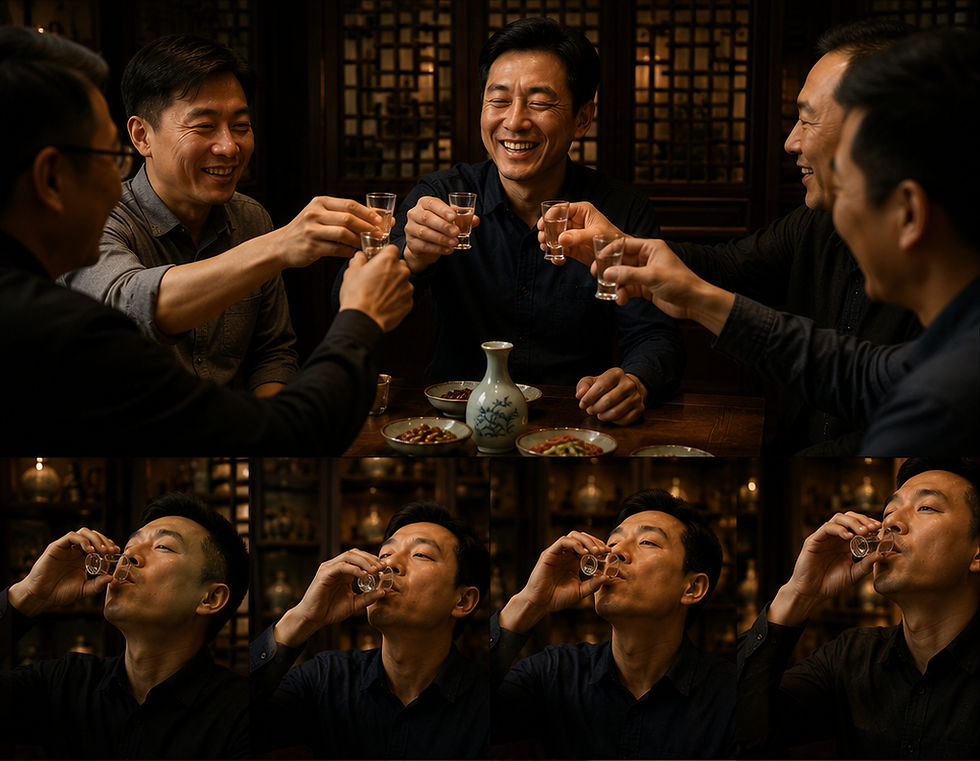
Glassware and pour size. Baijiu in China is poured into small ceramic or porcelain cups holding roughly 10 to 20 milliliters. A bigger pour is not considered generous; it is considered awkward. For a tasting bar, a small tulip glass works as a Western analogue and helps gather the aroma. Whichever vessel you use, fill it only part way and serve at room temperature.
Tasting technique. Approach baijiu the way you would a high-strength single malt. A very small sip, let it coat the tongue, exhale gently through the nose, and wait. The first impression is intense. The more interesting story arrives in the finish, which can run a full minute on a sauce or strong aroma spirit. Resist aggressive swirling. Heat plus agitation mutes the aromatics.

Ganbei etiquette. Ganbei (干杯) literally means dry the cup. At a Chinese banquet, the host or guest of honor raises a cup and everyone drains theirs in one go. This is part of why pours are small. When pouring for someone older or more senior, hold the bottle with two hands as a mark of respect. When receiving a pour, gently tap the table with two fingers to thank the pourer. None of this is required behind a Western bar, but knowing it lets a server set context for guests who want the cultural moment along with the spirit.
Food pairing. Baijiu thrives with bold food. Sichuan hot pot, salt-cured meats, fermented vegetables, dumplings, and roast duck all shine alongside strong and sauce aroma styles. Light and rice aroma baijius are more flexible, sitting comfortably next to dim sum, seafood, or vegetable dishes. The rule of thumb is to match richness with richness and let the spirit stand up to whatever is on the plate.

Baijiu in Cocktails: The Modern Bar's Best New Tool
Cocktails are where baijiu most often crosses over to Western drinkers, and the category has matured fast in the last five years. Strong aroma is the workhorse for shaken templates because its tropical fruit core gives sours and mules a backbone vodka or gin simply cannot match. Light and rice aromas behave like soft modifiers, perfect for highballs, spritzes, and anything where a perfumed top note will lift the drink. Sauce aroma is the most assertive, and it rewards stirred, sweetened, slowly served formats that let the umami sit forward.
A working repertoire of ten templates covers most of the floor:
The Ming Dynasty is the calling-card cocktail published by Ming River. Pineapple sweetens the spirit's tropical core, lime cuts through, bitters tie it together. Spec: 1.5 oz strong aroma baijiu, 0.75 oz lime, 0.5 oz pineapple, 0.5 oz simple, one dash aromatic bitters. Shake hard, double-strain to a chilled coupe.
The Baijiu Sour is the training-wheels recipe. 2 oz strong aroma baijiu, 1 oz lemon, 0.75 oz simple, optional egg white. This is the spec to reach for when a guest wants to know what baijiu tastes like inside a shape they already trust.
The East Side Negroni adapts the Negroni template for strong aroma baijiu. Equal parts, 1 oz each of strong aroma baijiu, Campari, and sweet vermouth, stirred and twisted with lemon. The tropical fruit and the vermouth's herbal sweetness together offset Campari's bitterness, producing a Negroni with a longer, more savory finish than the original.
The Baijiu Mule is the Trojan horse. 1.5 oz strong or light aroma baijiu, 0.75 oz lime, top with 4 oz ginger beer, lime wedge to garnish. A familiar template that lets a guest meet baijiu without committing to a neat sip.
The Sichuan Highball is an ode to the home of strong aroma. 1.5 oz strong aroma baijiu, 4 oz dry soda, four dashes of Sichuan peppercorn tincture, lemon twist. The pepper tincture adds a citrusy, tingling lift that flatters the spirit's ripe fruit register.
The Old Maotai is a baijiu Old Fashioned for the prestige bottle. 2 oz sauce aroma baijiu, demerara, aromatic bitters, expressed orange peel. Stirred long, served over a single large rock.
The remaining templates, the Mei Mei watermelon sour, the Concubine lychee highball, the Spritz Sino, and the Phoenix Gimlet, round out a menu that can move a guest from first sip to repeat visit. The free Baijiu Basics course covers all ten with full specs in both ounces and milliliters.

Where Baijiu Is Going Next
Three trends are reshaping the category right now, and any bar, retailer, or brand watching the space should be tracking all three.
Premiumization. The category is witnessing a clear shift toward premiumization, with consumers increasingly favoring high-end and collectible brands, such as Moutai and Wuliangye, driven by rising incomes and traditional gifting practices. The same dynamic is starting to show in early US distribution, where ultra-premium baijiu is the fastest-growing price tier. Grand View Research
Format innovation. Producers are launching novel baijiu formats aimed at younger drinkers, including lower-ABV expressions, fruit-infused lines, and ready-to-drink cocktails. In late 2025, Wuliangye rolled out "Crush On," a 29 percent ABV fruit-infused baijiu line aimed at millennials, exactly the kind of format that breaks through to drinkers who find traditional 53 percent expressions intimidating on first encounter.
Cocktail-led adoption. Western markets are not adopting baijiu the way China drinks it, neat in small cups at a banquet. They are adopting it in cocktails. Ming River was built specifically for this. The next wave of export-focused brands will be built around the same assumption, with bottle proofs, label design, and cocktail education programs aimed at the bartender first and the consumer second.
The category will not look the same in 2030 as it does in 2026. The bars and retailers who learn the fundamentals now will be the ones writing menus and stocking shelves with confidence when it does.
Baijiu FAQ
What is baijiu?
China's national spirit, distilled most often from red sorghum using a solid-state fermentation with a qu starter, then steam-distilled. It is the world's best-selling spirit and accounts for over 70% of China's alcohol market value.
What does baijiu taste like?
It depends on the aroma style. Strong aroma runs to tinned pineapple and ripe banana, sauce aroma to soy sauce and dried mushroom, light aroma to white flowers and aniseed, and rice aroma to cooked rice and jasmine.
How strong is baijiu?
From the high 30s percent ABV for soft rice aroma styles to 50 to 53 percent and beyond for sauce and strong aroma flagships.

Learn Baijiu Properly, Free
Reading about baijiu gets you to the door. Tasting baijiu walks you through it. Structured education makes sure you remember what you saw on the other side.
The free Baijiu Basics: China's Best-Kept Secret course on Learn Brands covers everything in this post in a structured, six-module format with flashcards, knowledge checks, and a completion badge. About 35 minutes start to finish.
The course is built for working bartenders, retail beverage staff, distributor reps, and curious drinkers. Every module ends with an auto-graded quiz at 75 percent to pass, retakes unlimited. The full ten-cocktail recipe set comes with specs in both US and metric units, ready to print and run on a service line.
Pour yourself a small flight of two or three baijius covering different aroma categories before you start, and the lessons will land much faster than reading alone. The category opens up the moment the qū hits the glass.
Exploring other categories your customers keep asking about? Do not miss our breakdown of tequila, mezcal, and the rest of the agave family.


